Managing Depression Medication via Telehealth: Appointments, Refills, and Adjustments
Telehealth psychiatry can manage antidepressant treatment from initial prescription through dose adjustments and long-term maintenance. Here is what the follow-up schedule looks like.
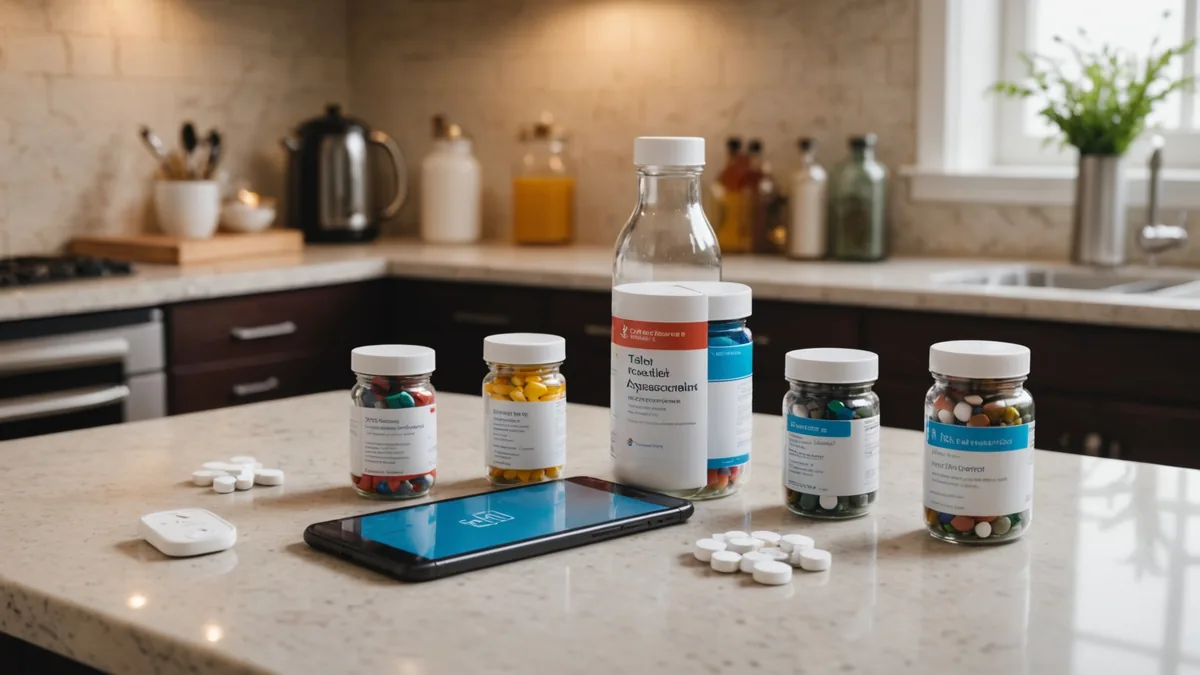
Imagine a medication pill organizer on a nightstand with SSRIs lined up across the week, and a patient portal open on a laptop screen showing an upcoming follow-up appointment with a secure message notification in violet. For millions of people living with major depression, this is what effective ongoing care looks like — a consistent prescriber, structured follow-ups, and a care plan that adapts as their response unfolds. Managing depression medication through telehealth is not about clicking through a digital pharmacy. It is about building a care relationship that tracks how you respond over time.
This article walks through what the medication management process actually looks like for depression: the evaluation, the medication selection logic, the first weeks on a new medication, and how ongoing follow-up care works in our practice.
How Depression Medication Selection Works
SSRIs and SNRIs are the standard first-line pharmacological treatment for major depressive disorder (MDD). Your provider selects among them — sertraline, escitalopram, fluoxetine, bupropion, venlafaxine, duloxetine, and others — based on your symptom profile, any prior medication trials and how they went, side effect sensitivities you flag (sleep effects, sexual side effects, appetite changes), medical history, and any medications you currently take that might interact.
There is no universally correct first antidepressant. Clinical guidelines from the APA frame first-line selection as a shared decision-making conversation. Your provider brings the clinical evidence; you bring your personal history, preferences, and priorities. A medication that worked well for a family member may or may not suit your neurobiological profile, so your provider weights your individual history more heavily than general population averages.
What to Expect in the First 8 Weeks
Most antidepressants require 4 to 8 weeks to show meaningful therapeutic response. This is one of the most important expectations to set before starting — the medication is not working slowly, it is working on a biological timeline that differs from how we expect medications to behave. Side effects — commonly nausea, mild sleep changes, or transient headaches — often appear in the first 1 to 2 weeks and typically subside before the therapeutic effect fully develops.
Your first follow-up appointment is scheduled at 4 to 6 weeks. Your provider uses this visit to assess tolerability and early response: whether symptoms are beginning to lift, whether side effects have resolved, and whether the starting dose is adequate or needs adjustment. If there is a partial response but insufficient improvement, the dose may be increased. If there is no response at a therapeutic dose over 6 to 8 weeks, your provider may recommend switching medication class or augmentation strategies.
“The timeline for antidepressant response is one of the most important things to understand before starting treatment. Early side effects are common and usually temporary; the therapeutic effect takes longer to arrive, and that is expected.”
Refill Management and Ongoing Prescribing
Refills for non-controlled antidepressants (SSRIs, SNRIs, bupropion) are sent electronically to your pharmacy between appointments through the Legion Health patient portal. Your provider cannot continue refills indefinitely without a clinical check-in — a follow-up visit is required at least every 90 days for ongoing prescribing. This standard protects you: it ensures that someone is monitoring your response, catching any side effects that developed over time, and adjusting the plan if your clinical needs have changed.
Between appointments, the patient portal allows you to message your care team about medication questions, flag side effects, or request an earlier appointment if something significant changes. This asynchronous communication capability is one of the practical advantages of telehealth over traditional office-only psychiatry — you are not waiting months in silence if something changes.
When the First Medication Does Not Work
Treatment-resistant depression — broadly defined as inadequate response to two or more adequate antidepressant trials — is more common than many patients expect. Research from the landmark STAR*D trial suggests roughly one-third of people with MDD do not achieve remission on the first medication they try. This is not a personal failure or a sign of a worse prognosis; it reflects the heterogeneity of depression as a biological condition. Your provider has a range of strategies available: augmentation with a second agent, switching to a different class, adding psychotherapy, or in more complex presentations, a referral to a specialist with higher-acuity expertise.
Long-Term Treatment and Planned Discontinuation
APA clinical guidelines and a substantial evidence base support maintaining antidepressant treatment for at least 6 to 12 months following full symptom remission to reduce relapse risk. For patients with recurrent depressive episodes, longer maintenance treatment may be clinically appropriate. The decision is collaborative, made between you and your provider based on your episode history, response to prior discontinuation attempts, and personal preferences.
When you and your provider agree that discontinuation is the right next step, it is managed through a gradual taper rather than abrupt cessation. Abruptly stopping an antidepressant can cause discontinuation syndrome: flu-like symptoms, dizziness, sleep disturbance, and mood changes that are temporary but uncomfortable. Your provider will design a taper schedule tailored to the specific medication and your duration of use.
Coordinating with Your Primary Care Provider
Most people receiving psychiatric medication management also have a primary care provider. Legion Health encourages coordination: our providers can send visit notes to your PCP with your consent, and our intake asks about your full medication list to screen for interactions. If your depression has a significant medical component — thyroid dysfunction, chronic pain, or medication side effects driving mood symptoms — that coordination becomes clinically critical.
Source Notes
- American Psychiatric Association. Practice Guideline for the Treatment of Patients with Major Depressive Disorder, Third Edition. APA Publishing. 2010 (updated 2023).
- Rush AJ, et al. “Acute and Longer-Term Outcomes in Depressed Outpatients: A STAR*D Report.” American Journal of Psychiatry. 2006.
- NIH National Institute of Mental Health. Depression: Treatment and Recovery. Updated 2023.
- Bauer M, et al. “World Federation of Societies of Biological Psychiatry Guidelines for Biological Treatment of Unipolar Depressive Disorders.” World Journal of Biological Psychiatry. 2015.
- SAMHSA. Depression Treatment: Evidence-Based Recommendations for Providers. 2020.
This article is for informational purposes only and does not constitute medical advice. Consult a licensed healthcare provider for diagnosis and treatment of any medical condition. Legion Health is not an emergency service. If you are in crisis, call or text 988 or go to your nearest emergency room.